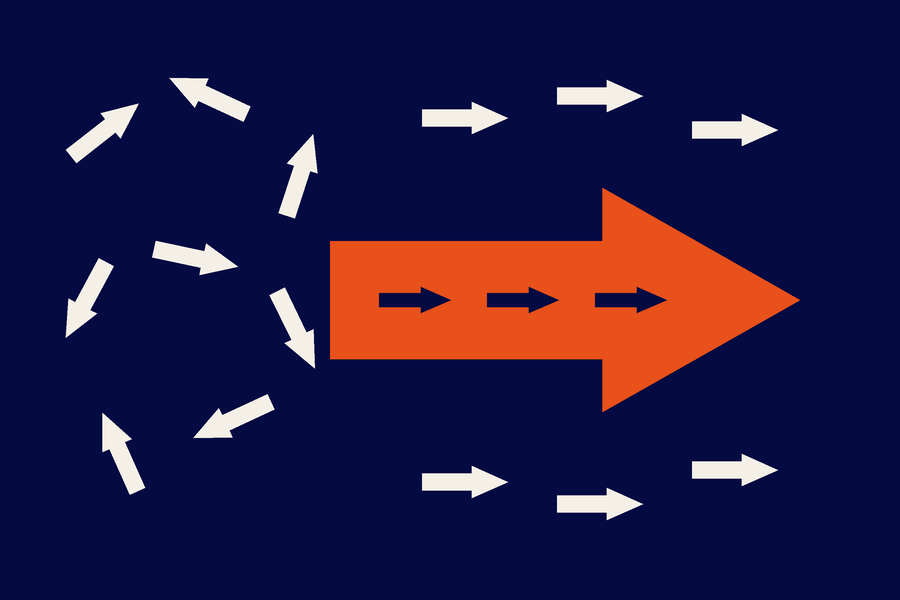
Many companies want to get going with marketing quickly: launch campaigns, publish content, advertise. But without a solid foundation this often produces disappointing results. The foundation of successful B2B marketing starts with a clear proposition, a good picture of your ideal customer and a website that carries that story. Your website is more than a digital business card: it is the engine that drives your entire marketing approach.
Why the website is at the core
In B2B the website is often the first serious point of contact with potential customers. Decision-makers do their own research, compare solutions and expect to find answers to their specific challenges on your website. If those answers are missing or vague, visitors drop off.
A strong B2B website does three things at once:
- Explains clearly what you do and for whom.
- Links the proposition to recognisable challenges in the market.
- Offers relevant information that matches the research process of several stakeholders.
Without this foundation, every next step in your marketing strategy becomes less effective.
What goes wrong without a solid website
Many companies invest in content and campaigns, but see that visitors do not convert. The reason is often simple: the website does not (fully) support the message. Blogs may be read, ads may be clicked, but the next step is missing. That is also the first question when you outsource content marketing: where does the piece lead? The same goes for anyone returning through display advertising after an earlier visit: the page has to answer that visitor's problem.
- Attracting attention has no value if visitors do not find a clear story afterwards.
- Interest disappears if landing pages do not convince.
- And data on visitor behaviour helps little if there is no relevant content to build on.
The common thread is always the same: without a good engine, the whole machine grinds to a halt. That machine has a name: read how B2B lead generation works and what a pipeline should deliver.
The website as the connecting link in the 4 steps
The B2B marketing approach consists of four steps: Foundation, Demand Generation, Demand Capture and Sales Intelligence. The website plays a key role in every step.
Step 1 (Foundation): The website translates your proposition and ICP into a clear, distinctive story.
Step 2 (Demand Generation): The website acts as archive and stage, where blogs, cases and videos remain findable and so keep working for a long time.
Step 3 (Demand Capture): Landing pages, customer stories and clear calls to action make the difference at the moment of decision.
Step 4 (Sales Intelligence): Website interactions provide the data that lets marketing and sales act in a targeted way.
That way the website is not only the start, but also the foundation of a successful B2B marketing approach.
Practical features of a strong B2B website
Planning to build a new website that works this way? A website that works as an engine has a few clear features:
- Clear positioning
Making clear at a glance what you do, for whom and why it is relevant.
- Recognisable challenges
Linking content to problems your audience actually experiences.
- Social proof
Customer stories make trust work for you.
- Logical navigation
A structure that matches the research process of different decision-makers.
- Technical integration
Connection to CRM and tracking tools so interactions become measurable and usable.
Conclusion
A good website is not a separate part of marketing, but the engine that drives all your efforts. It connects the strategic foundation to Demand Generation, provides conviction in Demand Capture and delivers the data for Sales Intelligence.
Investing in a strong website means investing in the heart of your marketing approach. It lays the foundation for better leads, convincing sales conversations and lasting growth. If you would rather hand that work over, you can outsource B2B lead generation to an agency that treats the website as part of the pipeline.