Why content marketing outsourcing so often disappoints
The pages at the top of Google make the same promise: you have no time, we take it off your hands. That is half the story. A content agency can write, plan and publish. It cannot know what your field engineer knows.
What goes wrong when a company outsources content marketing and then lets go:
- The agency gets a briefing, but no conversation with the people who do the work.
- Topics come from a keyword list, not from the questions customers put to sales.
- The article goes live and leads nowhere. Nobody knows who read it or whether a meeting came out of it.
The result is content that is correct and convinces no one. To avoid that, you supply three things before the agency writes a single line.
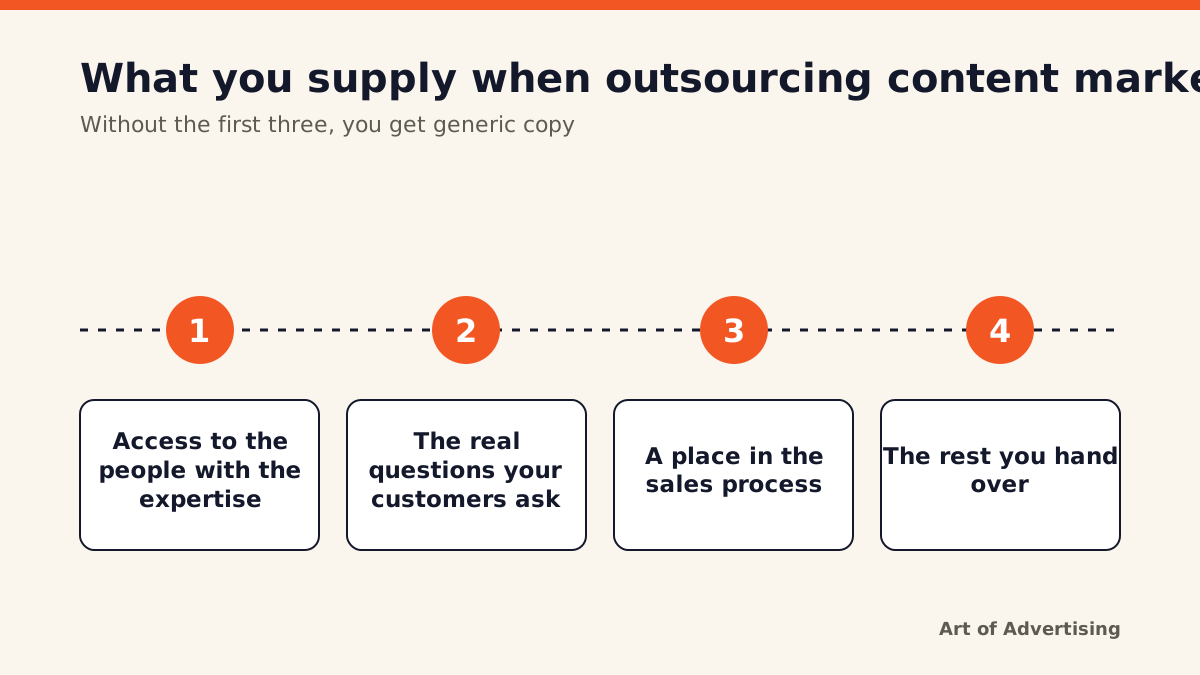
What you supply yourself when outsourcing content marketing
- Access to the people with the expertise. Not the marketing manager, but the engineer, the fitter or the account manager who talks to customers daily. Half an hour with that person beats a day of desk research. Google's search quality guidelines name experience and expertise of the author as marks of good content. That expertise sits with you, not with the agency.
- The real questions your customers ask. You will not find them in a keyword tool. They sit in the sales inbox, in quotes that did not go through and in the questions the service desk answers again and again. Give the agency access to those sources, or have sales hand over the questions that came back most often each month.
- A place in your sales process. An article should lead somewhere: a configurator, a quote request, a follow-up piece, a conversation. Agree up front what the reader can do after the article and who follows that reader up. Without that agreement you measure visitors, not enquiries.
Whoever arranges these three things spends their time talking, not writing. That is exactly the time you cannot outsource.
What you hand over
Everything after that, a content agency does faster than you, because it does this every day:
- Keyword research and the choice of which questions deserve their own page.
- Interviewing, writing, editing and visuals.
- The technical side: structure, internal links, page speed and metadata.
- Publishing at a steady rhythm and tracking what gets read.
- Repurposing: from article to LinkedIn post, newsletter and sales email.
An agency that knows its trade does not ask for your brand guidelines in the first meeting. It asks for an appointment with the colleague who has done the job longest.
What we saw
For DBT-Energie we built a knowledge base on transformer stations. The technical content did not come from us. It came from conversations with the people at DBT who design and install the stations. We asked the questions, they gave the answers, and we turned them into articles a buyer or project manager can read.
more organic traffic and better positions in Google
See the DBT-Energie knowledge base
At Allround Hekwerk it worked the same way: the topics came from what customers search for, the expertise came from the workshop.
more organic traffic on fencing search terms
In our content projects we saw that the quality of a piece is decided before the writing starts, in the conversation with the specialist. A good writer turns that into a readable article. The same writer without that conversation produces a generic one, however good they are.
Where the content leads: your sales process
Content that delivers nothing is rarely badly written. It simply leads nowhere. In our projects we see buyers reading a knowledge base for months before they request a quote. So you want to know which company is reading and what happens next.
That takes a route behind the content:
- A next step on the page: a configurator, a checklist, a quote request or a conversation.
- Recognition of business traffic, so sales can see which company read which articles.
- A CRM in which that lead lands with the right account manager, with a task and a deadline.
That last part is the work we do as an agency for marketing automation in HubSpot or your own CRM. Content fills the top of the funnel; the automation makes sure a conversation comes out at the bottom. What that funnel looks like in B2B is in our article on B2B lead generation.
Which questions you answer depends on who you want to reach. That is why we start a content project with the ideal customer profile: which company, which role, which question. Without that profile you write for everyone, and so for no one.
Conclusion
Content marketing outsourcing works when you supply what no agency can buy: expertise, real customer questions and a place in the sales process. The writing, the technical side and the rhythm you can then hand over with confidence. So do not start with a quote from an agency, but with an appointment on your own shop floor.