What is an employer value proposition?
An employer value proposition explains why someone should work for you rather than for a competitor. It sits at the heart of your employer branding: every job ad and every campaign you publish afterwards should rest on that promise.
You will also see the term written as employee value proposition. Both describe the same idea from two sides: what the employer promises and what the employee experiences.
A usable EVP has three properties:
- It is true. What you promise holds up on a Tuesday afternoon on the shop floor.
- It is specific. It is about your work, your crew and the way you do things.
- It is aimed at one group. The technician you are looking for wants to hear something different from the engineer.
Why the workshop is the wrong place
Nearly every guide at the top of Google describes the same route: internal research, external research, a session with management, write it down, test it. We take a different position. The person who matters most is missing from that session: the candidate you want.
What happens in such a session will sound familiar:
- Management picks the words it likes best.
- The outcome is a compromise, so it fits everyone and moves no one.
- The result reads like the job ads you already had.
The candidate you want usually has a job already. That person will never read your EVP document. At best they see an ad go by and decide within seconds whether it is about them. What they do next says more about your promise than a day of meetings.
How do you find your employer value proposition without a workshop?
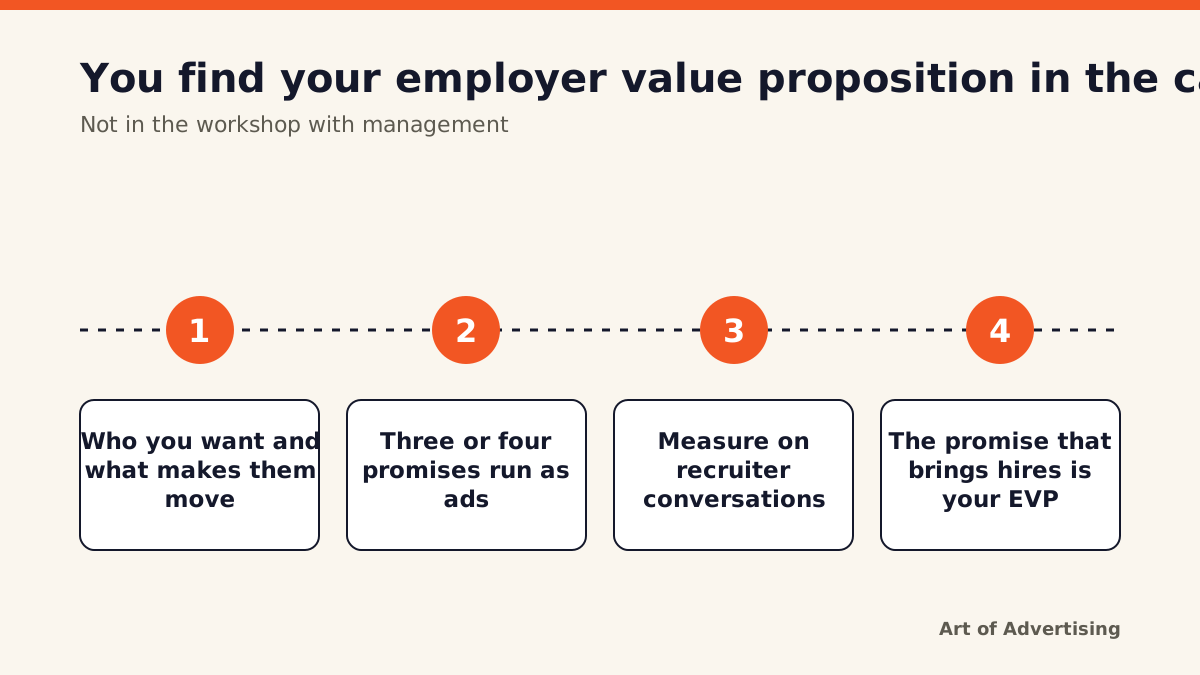
We treat a vacancy as a campaign with a different buyer. That is how we run recruitment marketing too, together with our sister company Active Talent. We find the promise in four steps.
- Who you want and what makes them move. Describe the candidate the way you would describe an ideal customer profile: what work do they do now, at what kind of company, and what would make them switch. Ask the colleagues you hired most recently.
- Three or four promises run as ads. Each ad carries one promise: the work itself, the crew, the say you get, the growth. Real colleagues in the picture, no stock photos. On Meta or LinkedIn, aimed at people who have a job today.
- Measure on conversations with the recruiter. Clicks and applications tell you little, because they also come from people who do not fit. Count per promise how many conversations the recruiter has and who ends up starting.
- The promise that brings hires is your EVP. Only then do you write it down. That text has been tested with the people it is about, not with management.
It does not save work, it moves the work. You spend the hours on campaigns and conversations instead of on a document.
What we saw
At Klimaatgroep Holland there was more work than the team could handle. We did not start with an EVP document but with job campaigns on Meta, and Active Talent held the conversations with everyone who responded. What the campaigns brought in decided what we told candidates the next month.
several new colleagues hired, and it keeps going
See the Klimaatgroep Holland project
In our campaigns we see that the candidate who eventually starts rarely responded to the first ad. They had seen the employer go by a few times before. Recognition comes before the promise, just as it does with buyers you want to stay top of mind with.
What goes into an employer value proposition?
The content of an EVP differs per trade, but the same building blocks keep coming back. Pay is on the list, but rarely at the top: in our experience, someone who switches for salary alone leaves for the same reason.
- The work itself: which jobs, which technology, how much variety.
- The colleagues: who you work with, how stable the crew is.
- The say you get: what you decide yourself, how tight the schedule is.
- The growth: what you learn here that you would not learn elsewhere.
- The pay: salary, van, tools, leave.
Dutch guides such as Randstad and artra test an EVP against five requirements: true, sustainable, attractive, distinctive and credible. Those are good requirements, but you can only apply them once candidates have seen the promise. That is exactly why we test first and write afterwards.
Conclusion
An employer value proposition is a promise to the candidate you want, not a text for management. You find it by running promises as ads and measuring on conversations with the recruiter. The promise that brings hires is the EVP you write down.