What is lead generation?
Lead generation turns anonymous visitors into named contacts you are allowed to approach. Someone fills in a form, asks for a quotation or signs up for a demo. From that moment you have a name, a company and a reason to get in touch.
What is lead generation not: a bought list of addresses from companies that never heard of you. Such a list produces calls, but rarely with people who were waiting for you.
In practice a lead arrives in three ways:
- Someone leaves their details on your site.
- A company visits your site without filling in anything.
- A contact replies to an ad or an email.
What makes B2B lead generation different from B2C?
B2B lead generation rarely involves a single decision maker. Procurement, engineering and management all have a say in a business purchase. Such a process runs over months. A lead is therefore not an order in the making, but the start of a conversation.
Three differences shape the approach:
- Several people inside the same company decide together on one purchase.
- Only a small share of your market is actively buying at any given moment.
- The value of a customer justifies a run-up of months.
A campaign that aims only at immediate enquiries therefore does half the job. You reach the companies searching today and miss the ones that start next quarter.
How do I generate B2B leads?
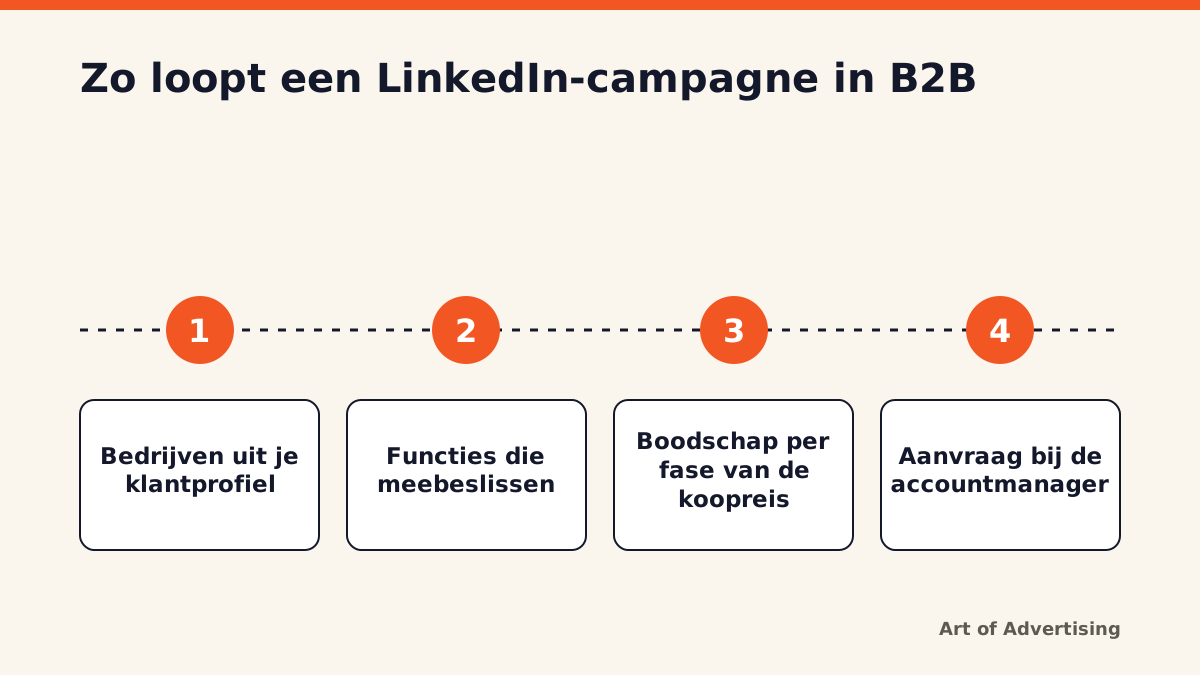
You can generate B2B leads in four steps, and each step feeds the next one into your pipeline.
- Write down who you want to speak to. An ideal customer profile states which companies and roles you are after, and which you are not.
- Build recognition. Through LinkedIn, content and video you become familiar to those companies long before they look for a supplier. We call that demand generation.
- Capture the question. Search ads and findable pages pick up the enquiry as soon as someone starts looking.
- Hand sales the context. Enrich the lead with company data, the campaign and the pages visited, which is sales intelligence.
That order is also the order we work in as a lead generation agency for B2B companies. Channels are chosen after step one, never before it.
Where B2B lead generation stalls in practice
A pipeline rarely runs dry because there are too few leads. It stalls on what happens after the enquiry. Marketing counts forms, sales counts deals, and the stretch in between stays undiscussed.
The three causes we run into most often:
- Nobody ever wrote down what makes a company a good lead.
- An enquiry arrives as a name and an email address, without any origin.
- Sales never reports back which enquiries turned into a conversation.
What we saw in B2B lead generation campaigns
In our campaigns we saw the discussion shift the moment sales could see where a lead came from. The subject was no longer how many leads arrived, but which ones.
At DBT-Energie sales knows for each lead which campaign it came from. An account manager can therefore say which campaign produces conversations and which one does not.
sales knows for each lead which campaign it came from
That is also our position, and it differs from the tip lists that rank high in Google. Almost all of them are about more leads. We would rather steer on fewer leads that you can trace back to a campaign.
At Mitsubishi Forklift Trucks we took the same route, with LinkedIn, Google Ads and search visibility as one system.
122% more product enquiries
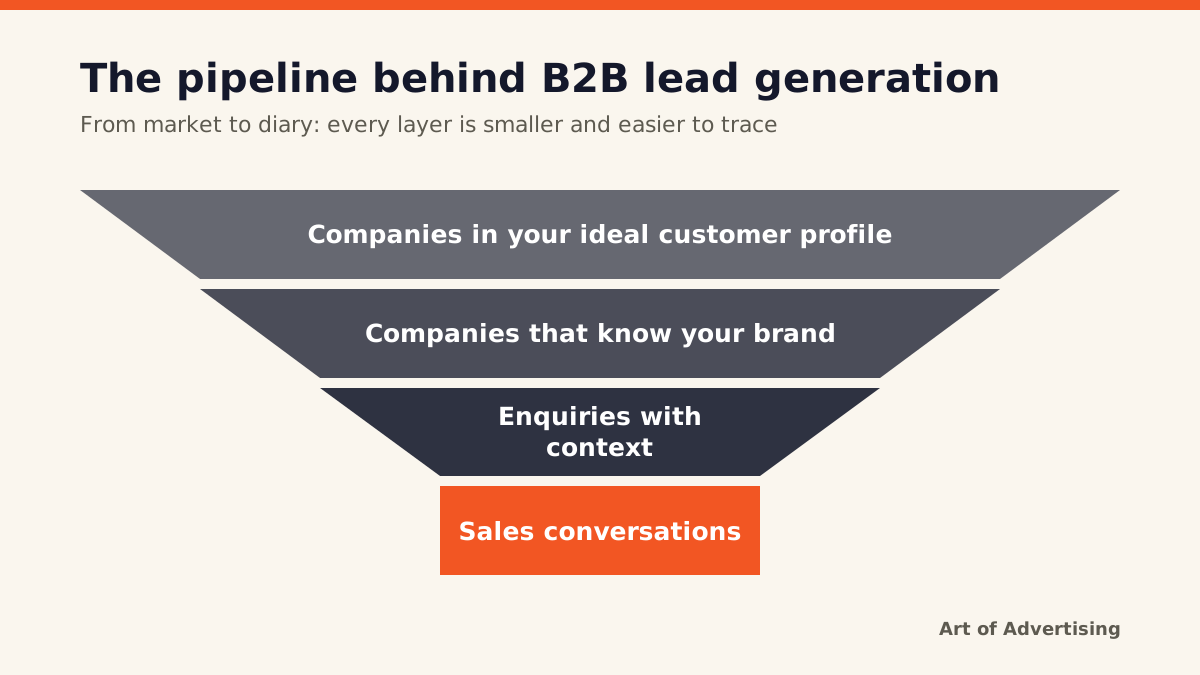
B2B lead generation is not a campaign but a pipeline. Steering on volume alone fills the diary with conversations that lead nowhere. Steering on origin tells you which campaign produces the next sales conversation.