What does email marketing do, and what do you need in B2B?
Agencies that rank high on Google for email marketing agency offer roughly the same thing: strategy, template design, sending newsletters, testing and reporting. That suits a webshop with a short buying journey.
For our B2B clients, the buying journey is long and the order value is high. A company does not buy a heat pump, a machine or a software package because a newsletter arrived. The purchase decision is made after research; that leaves traces on your website and in your CRM.
So what you need in B2B:
- A CRM in which contacts, companies and their behaviour are in one place.
- Segments that say something about the opportunity: sector, size, which pages were viewed.
- Agreements on who follows up: the account manager, or an email that prepares the conversation.
- Emails written for each type of behaviour.
Why the newsletter does not solve the problem in B2B
A newsletter goes out at a moment you choose. At that moment, the buyer is usually not in a buying process. The question that does lead to enquiries is a different one. What happens in the hour after a company requests a quote? And in the week after someone from a recognised company viewed your pricing page? That is where the follow-up that makes the difference sits, and you can largely automate that follow-up.
What goes wrong without that follow-up:
- The enquiry arrives as an email to one colleague, who is away that week.
- The visitor doing research stays invisible, because they do not fill in a form.
- Marketing sends everyone the same email, so sales cannot do anything with it.
Email as follow-up: the email goes out after a behaviour
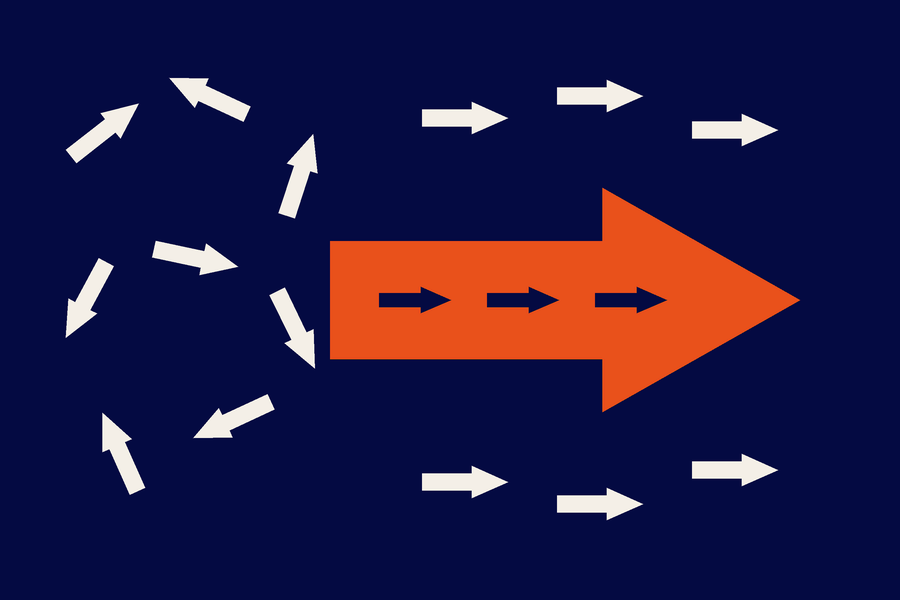
Email as follow-up means that a behaviour determines the content. That is exactly what marketing automation does: rules that let your systems act on what a company does. We set up that route in four steps, the same steps as in the image with this article.
- Behaviour: enquiry, visit or download. A quote request, a visit to a product page, a brochure download. The behaviour lands in the CRM, with the company attached.
- The CRM recognises the company and segment. The system adds sector, size and the pages visited to the lead, and classifies it: big chance, small chance, not ready yet.
- Big chance: a task for the account manager. Whoever fits the profile and gave a clear buying signal gets a phone call, not an email. The account manager gets a task with a deadline.
- The rest: an email that fits the behaviour. Whoever downloaded a brochure gets the follow-up question that goes with it. Whoever viewed the pricing page gets an explanation of what determines the price. Whoever requested a quote gets a confirmation with the next step, and a reminder if it stays quiet.
Examples of such emails, with the content that goes with them:
- After a quote request: who will call when, and what you can prepare in advance.
- After a recognised company visits a product page: the answer to the question that page leaves open.
- After a download: one follow-up question, not a long series.
- After a conversation that led nowhere: a short email as soon as the company returns to the site months later.
How we set up that route, in HubSpot or in the CRM you already have, is described on the page about marketing automation and HubSpot. Email is one of the steps there, not the goal.
What we saw
At Partnify, a platform for collaboration between companies, agencies and freelancers, leads come in that vary greatly in size. In HubSpot we set up a segmentation that scores every lead straight away on size and relevance. The difference is not in the email itself, but in who gets which route.
big opportunities straight to sales, the rest gets automated follow-up
The emails in that follow-up are short and written per segment. A big chance gets a phone call right away. So the gain from email lies in getting the timing and targeting right.
Who follows up: the CRM, the segments and the account manager
Follow-up by email only works if the CRM knows who did what. That is why a project with us does not start with a template, but with agreements.
- The CRM is yours, and it holds contacts, companies and behaviour together.
- The segments are agreed with sales: when is a lead theirs, when is it marketing's. They start from your ideal customer profile.
- For each segment it is set out who follows up and within what time.
The behaviour that triggers the email does not have to be a form. With sales intelligence you see which companies visit your site before they fill anything in. At Klimaatgroep Holland we segment that traffic by sector, so the account manager knows which company to call. An email is the second choice there; the conversation is the first.
business website traffic segmented per sector, ready for the account manager
When do you outsource this to an email marketing agency?
Email marketing is not a separate service with us. What we set up is the route from lead to sales conversation; email is one of the steps in it. If you are looking for an agency for a monthly newsletter with a nice design, the agencies at the top of Google are better set up for that than we are.
Outsourcing makes sense if:
- Leads come in, but not enough is done with them.
- The CRM is in place, but was set up by the vendor and not around your sales process.
- Sales and marketing agree that they want to make arrangements about follow-up.
What you keep doing yourself, even if you outsource:
- The CRM stays yours, with the data in it.
- You decide the segments together with sales; an agency can propose them, not impose them.
- An account manager follows up a big chance, not an email sequence.
If no demand is coming in yet, do not start with email. Build B2B lead generation first; following up on nothing gets you nothing.
Conclusion
In B2B, email is follow-up, not a newsletter. The timing is based on behaviour and matches it; big chances get a personal conversation. If you want to outsource this, you are not looking for an email marketing agency, but for someone who sets up the CRM, the segments and the follow-up.